Genre: Culture

  • Sultan’s Legacy: A Journey of Faith and Identity

    Sultan’s Legacy: A Journey of Faith and Identity

    Long before it became synonymous with hipster cafes and boutique hotels, Kampong Glam was a royal seat, a sacred destination, and a crossroads of the Islamic world. Traders sailed in with spices and silk, pilgrims paused here on their sacred journeys, and families built mosques, schools, and shops that reflected their faith and identity. This is the Sultan’s legacy — and it is far more complex, and far more compelling, than most visitors ever suspect.

    On this 150-minute walking tour, we trace the layers of a neighbourhood that has been remade many times, yet somehow retained the essence of what it always was: a place where faith, commerce, and community converge.

    What You’ll Discover

    • The Sultanate — The story of Sultan Hussein Shah, whose treaty with Raffles in 1819 changed the fate of an island and a region, and who was rewarded with a kampong that bore his name
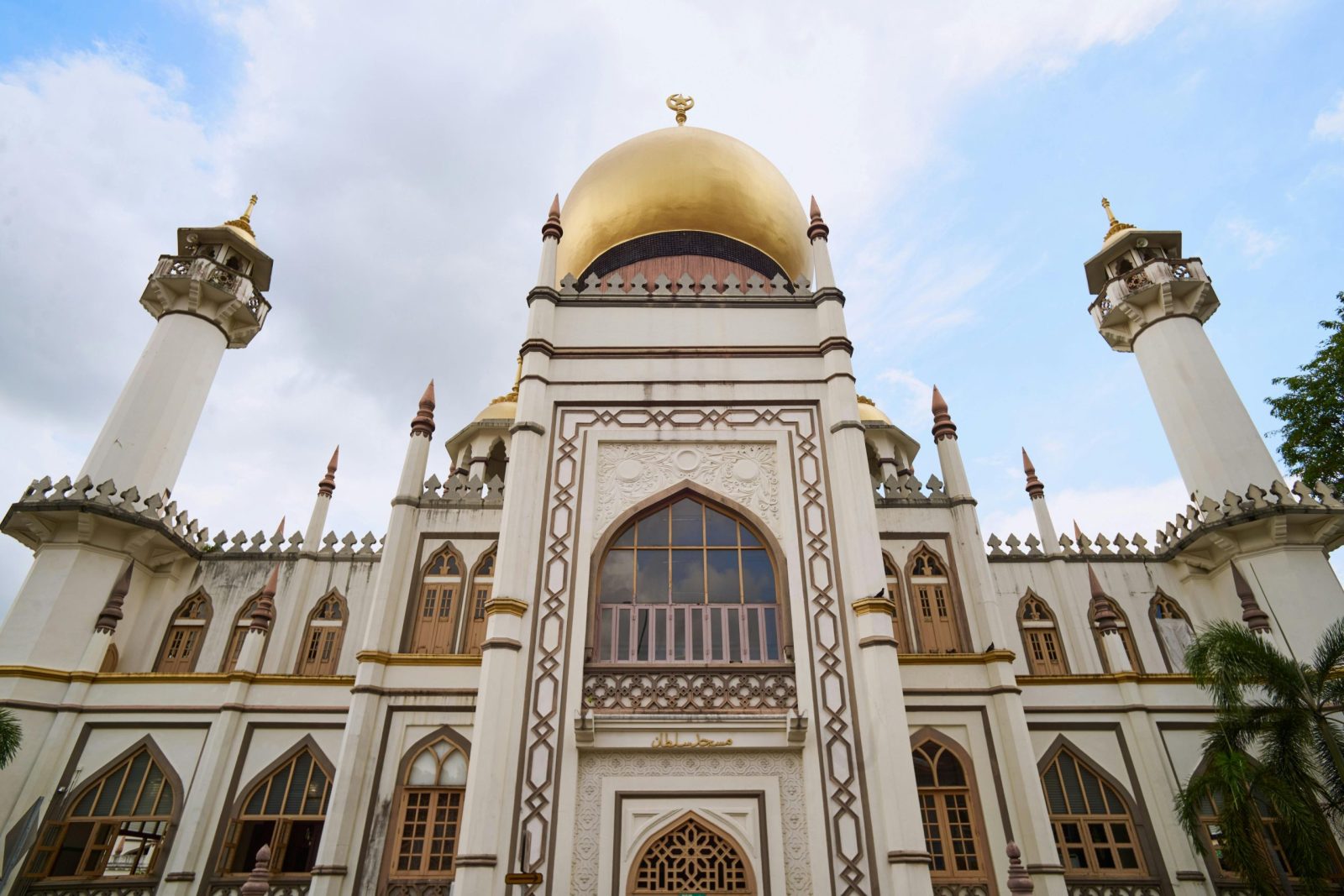
    • The golden domes — Sultan Mosque, the spiritual centrepiece of Kampong Glam, built by the community and for the community, with domes that glitter above the roofline as a daily act of faith
    • The pilgrimage economy — How Bussorah Street became a staging post on the Hajj route, and why the Arab traders who settled here became some of Singapore’s most influential businessmen
    • Hidden royalty — Istana Kampung Glam and Gedung Kuning, the remnants of a Malay royal palace complex that most visitors walk past without ever realising what they are seeing
    • Haji Lane’s reinvention — How a street of Malay craftsmen became one of Singapore’s most photographed destinations, and what that transformation reveals about the city’s relationship with heritage

    Your Itinerary

    Lavender MRT (Exit B) — We approach Kampong Glam as the original visitors did — from the outside, building anticipation for what lies within.

    Hajjah Fatimah Mosque — Our first stop is this elegant mosque built by a Bugis trader-turned-businesswoman in 1846. Her story alone is worth the tour.

    Istana Kampung Glam & Gedung Kuning — The remains of the Malay royal compound. We explore the political history embedded in these buildings and the community that fought to preserve them.

    Sultan Mosque — The architectural and spiritual heart of the neighbourhood. We explore its design, its history, and its role in the daily life of Singapore’s Muslim community.

    Bussorah Street — The pilgrimage street. We read its history in the buildings, the businesses, and the memories of those who passed through on their way to Mecca.

    Arab Street — The textile and craft district that has served the neighbourhood’s commerce for two centuries.

    Haji Lane — We close on this famous street, reflecting on what it means for a city to preserve, reimagine, and sometimes commodify its heritage.

    Who Is This Tour For?

    This tour is perfect for those interested in Islamic history and architecture, Malay culture, Singapore’s multicultural story, and the complex politics of heritage preservation. It is also an excellent choice for Muslim visitors seeking a tour that speaks directly to their cultural context.

    Tour Details

    • Duration: 150 minutes
    • Start: Lavender MRT, Exit B
    • End: Haji Lane
    • Group size: 4 to 20 participants
    • Language: English
    • Terrain: Flat, suitable for all fitness levels
    • What’s included: Expert licensed guide, curated route, cultural and religious context

    Frequently Asked Questions

    Do we enter the mosques? We visit the exterior and surroundings of Sultan Mosque. Entry into the mosque is possible during non-prayer hours for visitors dressed modestly. Sarongs are available at the entrance.

    Is this tour suitable for non-Muslim visitors? Absolutely. This tour is designed to build understanding and appreciation across cultural lines. Non-Muslim guests consistently find it one of the most eye-opening experiences in Singapore.

    How do I get a price quote? Pricing is group-size dependent — larger groups benefit from better rates. Contact us via WhatsApp or email for a personalised quote.
  • Little India: A Sensory Stroll Through Time

    Little India: A Sensory Stroll Through Time

    Close your eyes for a moment. Hear the temple bells. Smell the garlands of jasmine. Feel the heat rising from the pavement, carrying with it decades of spice, song, and story. Now open your eyes — you are in Little India, one of Singapore’s most extraordinary neighbourhoods, and you are about to understand it in a way that no guidebook has ever explained.

    The Indian community’s presence in Singapore predates the colonial era. They came as traders, soldiers, convict labourers, and professionals — and they built a world within a world, layered with ritual, colour, and remarkable tenacity. This 150-minute sensory walking tour is their story.

    What You’ll Discover

    • The origins — How Indian traders were sailing to the Malay Archipelago centuries before Raffles arrived, and why Singapore became a magnet for the Tamil, Telugu, Punjabi, and Bengali communities
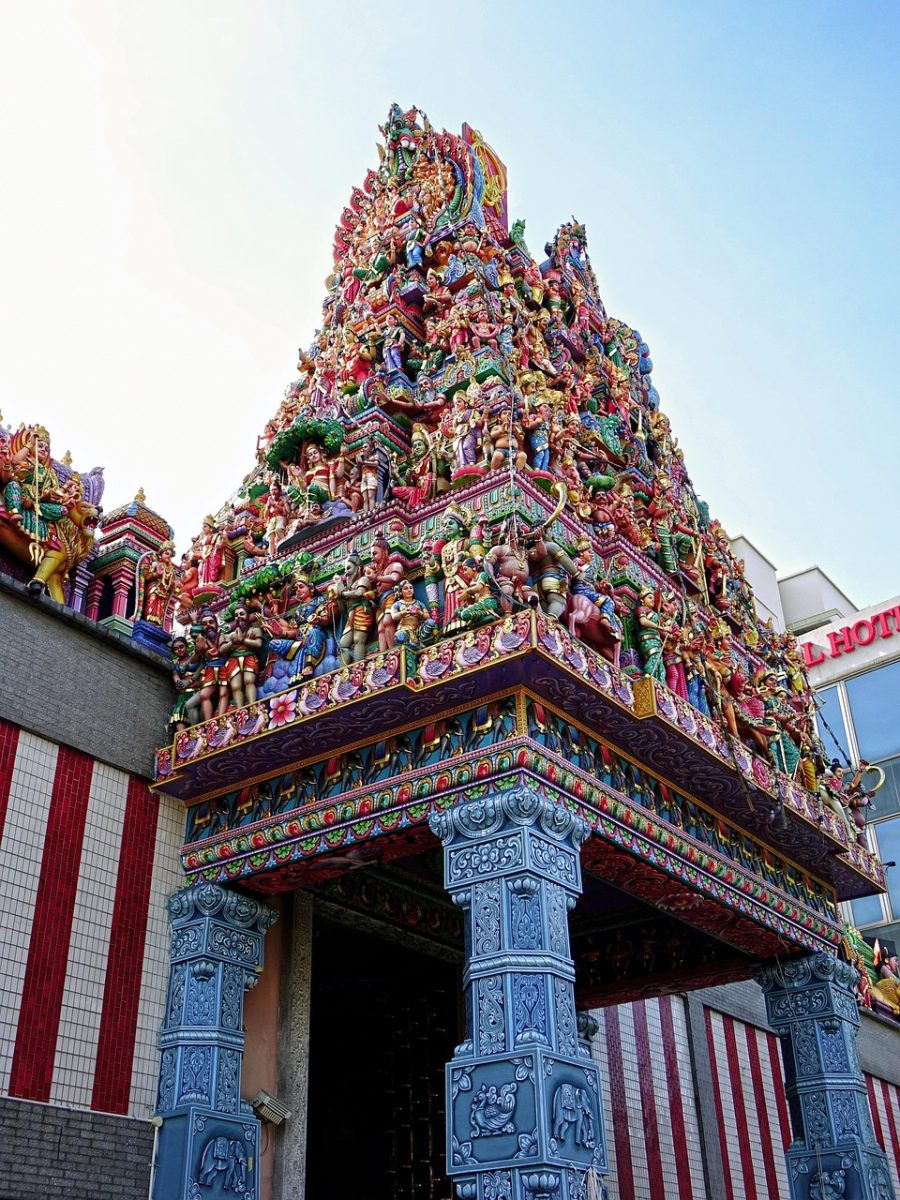
    • Sacred architecture — The magnificent Sri Veeramakaliamman Temple, its gopuram towers alive with colour and devotion, a spiritual anchor for the community for over 150 years
    • A tale of two cultures — The former residence of Tan Teng Niah, the last surviving Chinese villa in Little India, which speaks volumes about the neighbourhood’s multicultural reality
    • Street art as history — The murals that line Little India’s walls are not decoration. They are deliberate acts of memory, commissioned to ensure that no story is forgotten
    • The sensory marketplace — Buffalo Road, Tekka Centre, and the Little India Arcade, where the sights and scents of the Indian subcontinent are compressed into a few extraordinary blocks

    Your Itinerary

    Little India MRT (Exit E) — We begin at the edge of the district and immediately enter a different world. Your guide will frame the context: who came here, why, and what they built.

    Buffalo Road & Tekka Centre — The commercial spine of Little India. Once the site of a cattle yard, now a wet market and hawker centre that remains the daily heartbeat of the community.

    Little India Arcade — Garlands, silk, spices, and gold. This compact arcade captures the essence of the neighbourhood’s mercantile spirit in one fragrant, dazzling space.

    Street Murals — We pause at several of the neighbourhood’s iconic murals, reading each as a visual document of the community’s history and imagination.

    Sri Veeramakaliamman Temple — One of Singapore’s most important Hindu temples, dedicated to the goddess Kali. We explore its architecture, iconography, and the rituals that bring it to life daily.

    Former House of Tan Teng Niah — Our final stop is this extraordinary pastel villa, a reminder that Little India’s story was never just one community’s story.

    Who Is This Tour For?

    This tour is ideal for curious travellers, cultural enthusiasts, families, school groups, and corporate teams seeking a vivid, sensory introduction to Singapore’s South Asian heritage. It is particularly meaningful for visitors with Indian heritage reconnecting with a diaspora history.

    Tour Details

    • Duration: 150 minutes
    • Start: Little India MRT, Exit E
    • End: Former House of Tan Teng Niah
    • Group size: 4 to 20 participants
    • Language: English
    • Terrain: Flat, suitable for all fitness levels
    • What’s included: Expert licensed guide, curated route, cultural narrative

    Frequently Asked Questions

    Is Little India safe to visit? Absolutely. Little India is a vibrant, welcoming neighbourhood. Our guides know it intimately and will ensure a comfortable, enriching experience.

    What is the best time of day for this tour? Morning tours (before 11am) offer the most atmospheric experience, with markets at their busiest and the light at its most beautiful. Evening tours have their own magic, particularly around the temple.

    How do I get a price quote? Pricing varies by group size — larger groups receive preferential rates. Contact us via WhatsApp or email to discuss your requirements.

  • Nanyang Dreams: A Journey of Survival and Hope

    Nanyang Dreams: A Journey of Survival and Hope

    They came with nothing but courage. From the villages of Fujian and Guangdong, they boarded ships and sailed into the unknown, chasing a dream they called Nanyang — the South Seas. From temples and shophouses to bustling streets and markets, we bring their fragile hopes and fierce hearts to life, showing how their dreams helped shape the Singapore we know today.

    Chinatown is not a tourist attraction. It is a testament. Every crumbling shophouse facade, every incense-filled temple, every weathered mural is a message from the people who built this city with their bare hands. This 150-minute walking tour is their story, told where they lived it.

    What You’ll Discover

    • The geography of survival — How the early Chinese settlers organised themselves by dialect group, clan, and trade, and why those divisions still echo today
    • Sacred spaces — The temples that were the first institutions these migrants built — not for themselves, but for the gods they hoped were still listening
    • The shophouse economy — How an entire community lived, worked, worshipped, and died within the same few streets
    • Art as memory — The murals and street art that transform Chinatown’s walls into an open-air archive
    • The taste of history — How the hawker culture that feeds modern Singapore was born in the poverty and ingenuity of these early settlers

    Your Itinerary

    Telok Ayer MRT (Exit A) — We begin at one of Singapore’s oldest streets, where the first ships docked and the first prayers were said on dry land.

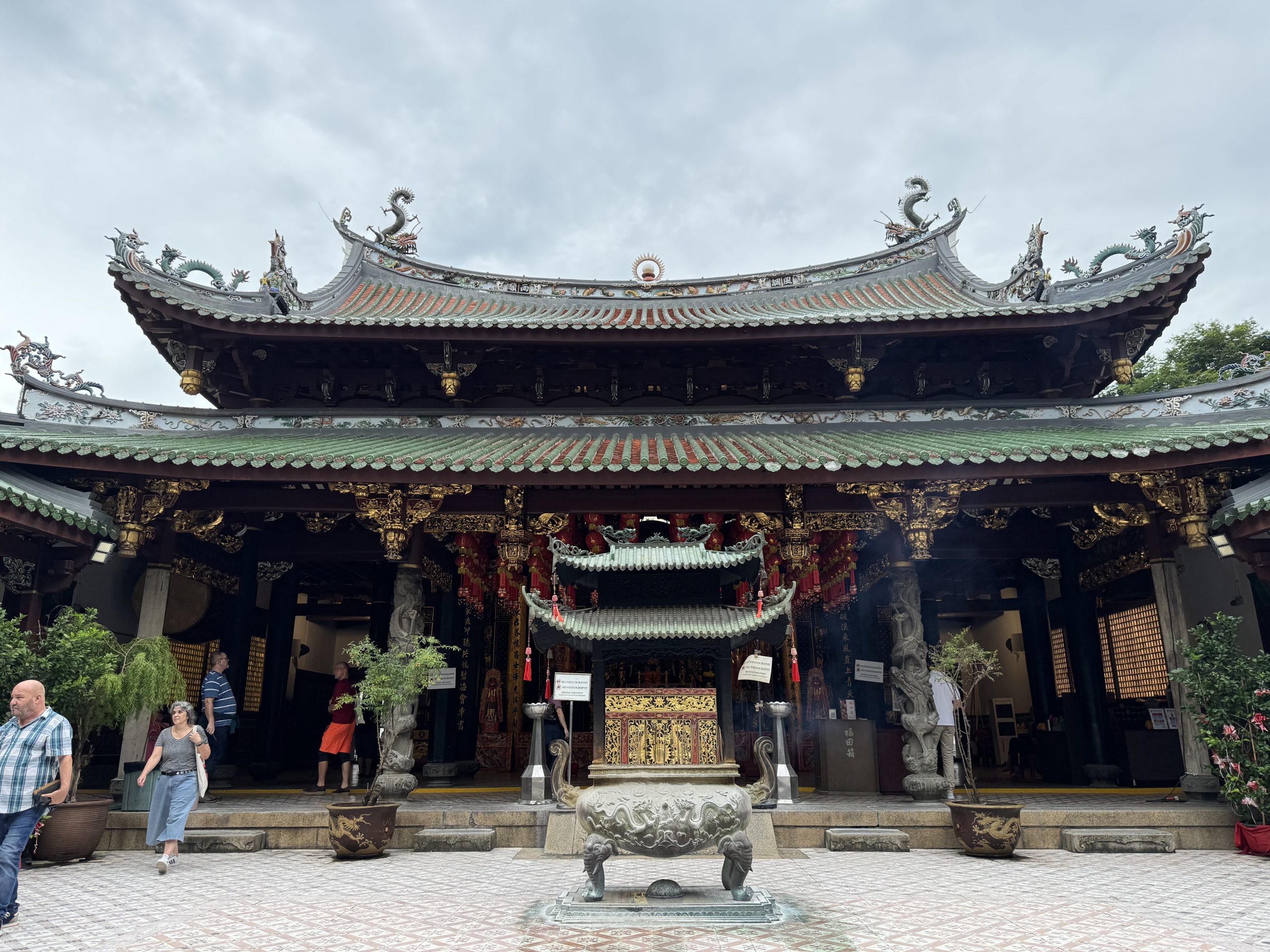
    Thian Hock Keng Temple — Built in 1839, this Hokkien temple was the first thing many immigrants saw after months at sea. It is one of Singapore’s oldest and most magnificent Chinese temples.

    Preserved Shophouses — The original live-work units of the migrant economy. We explore what daily life looked like behind these narrow facades.

    Sri Mariamman Temple — A reminder that Chinatown was always multicultural. Singapore’s oldest Hindu temple stands here, a monument to the Tamil community’s equally extraordinary story.

    Pagoda Street & Street Murals — The commercial heart of early Chinatown, and today a canvas of memory depicting the faces and stories of those who came before.

    Buddha Tooth Relic Temple — A modern structure housing ancient devotion. We close with a reflection on how faith sustained a community through hardship, loss, and eventual prosperity.

    Maxwell Food Centre — Our final stop connects the past to the present. The hawker food culture born of necessity is now celebrated as a national treasure and UNESCO heritage practice.

    Who Is This Tour For?

    Perfect for history lovers, diaspora visitors reconnecting with ancestral roots, school and student groups, corporate teams seeking cultural insight, and anyone moved by stories of courage, community, and resilience.

    Tour Details

    • Duration: 150 minutes
    • Start: Telok Ayer MRT, Exit A
    • End: Maxwell Food Centre
    • Group size: 4 to 20 participants
    • Language: English
    • Terrain: Flat, suitable for all fitness levels
    • What’s included: Expert licensed guide, curated route, historical narrative

    Frequently Asked Questions

    Can we visit the temples inside? Yes. We enter several of the temples on the route. Modest dress is appreciated — shoulders and knees covered where possible.

    Is there food on this tour? The tour ends at Maxwell Food Centre, giving participants the opportunity to experience Singapore’s hawker culture firsthand. Food is at participants’ own expense.

    How do I get a price quote? Pricing is based on group size — larger groups receive better rates. Reach out via WhatsApp or email for a tailored quote.